Gateway Joins the Logos Ecosystem to Build the LEZ Atomic Swap Suite
A contribution to privacy-preserving interoperability, trust-minimized value movement, and sovereign ecosystem infrastructure.
Disclaimer: Gateway is an independent grant recipient. The LEZ Atomic Swap Suite is developed, owned and maintained by Gateway. Nothing in this post creates a partnership, joint venture, agency or employment relationship between Gateway and Logos, and the grant does not constitute an endorsement of Gateway’s products or services. Any software described here is experimental, provided as-is without warranty, and use is at the user’s own risk. This post is not financial advice or an offer of any financial service and reflects Gateway’s own views and forward-looking intentions.
The cost of exit is one of the most important questions in any digital network.
If value can only move through centralized exchanges, custodial venues, or wrapped-token bridge assumptions, then users and builders inherit external dependencies at the exact point where independence matters most.
Gateway and Logos are collaborating through a Logos grant to contribute to the LEZ (Logos Execution Zone) Atomic Swap Suite, a foundational interoperability primitive for the Logos ecosystem.
The work focuses on enabling trust-minimized atomic swaps between LEZ and Bitcoin and other cryptocurrencies, helping users and builders move value across networks with fewer intermediaries, fewer trust assumptions, and stronger privacy guarantees.
For Gateway, this is a concrete expression of a broader infrastructure thesis we care deeply about: sovereign onchain systems need private, reliable, and trust-minimized ways to move value across networks.
About Gateway
Gateway is an institutional infrastructure orchestrator for sovereign onchain finance.
We build production-grade infrastructure for onchain systems: execution environments, interoperability, privacy-preserving applications, developer-ready primitives, and reliable deployment infrastructure for networks moving from architecture to real usage.
Our work is focused on helping ecosystems, institutions, and infrastructure teams move beyond isolated technical components into environments that can support real activity.
That means building the connective infrastructure around networks: how systems run, how value moves, how applications are deployed, how privacy is preserved, and how infrastructure becomes reliable enough for others to build on.
Logos and the Importance of LEZ Atomic Swaps
Logos is a decentralised collective movement that fosters action through local grassroots organising. They build technology empowering people to create resilient, sovereign coordination systems. Logos provides tools for free association, free speech, and self-governance. Their movement is shaped by shared principles cultivated through local meetups, online action groups, and global digital freedom campaigns, all driven by those who join them.
The Logos stack brings together execution, communication, storage, privacy, and coordination layers for communities and applications that need stronger guarantees around autonomy, resilience, and trust minimization.
Within that stack, LEZ (Logos Execution Zone) is the execution environment where builders can deploy programs, create financial primitives, and begin shaping applications for a privacy-preserving ecosystem.
Gateway’s contribution sits at an important intersection between the two organizations: building infrastructure that allows value to move across networks without weakening the principles those networks are built on.
Why This Work Matters
Every serious ecosystem eventually faces the same question:
Can value move through it without weakening the guarantees it was designed to provide?
For privacy-first and sovereign networks, that question becomes especially important. It is not enough for a network to have strong architecture if the only practical way to move value in and out depends on centralized venues, custodial gateways, or wrapped-token assumptions.
That is why atomic swaps matter.
At a technical level, atomic swaps enable direct exchange between networks without requiring users to rely entirely on an intermediary. At an ecosystem level, they represent something larger: a privacy-preserving interoperability primitive.
For LEZ, this means a stronger foundation for value movement, builder activity, and future financial applications. Before applications can mature, before markets can form, and before more complex workflows can emerge, users and builders need reliable ways to move assets across ecosystems with fewer trust assumptions.
Privacy-Preserving Interoperability as the Broader Direction
Interoperability is often discussed as a bridge problem.
For Gateway, it is much broader than that.
The next phase of onchain infrastructure will require systems that can move value, information, proofs, and permissions across different environments while preserving the security, privacy, and sovereignty requirements of each network.
That is especially important as more ecosystems move toward sovereign or privacy-preserving architectures. A sovereign network cannot remain isolated forever. It needs ways to connect with other systems. But those connections cannot simply recreate the same trust assumptions, exposure risks, and dependency patterns that the ecosystem was designed to avoid.
This is where privacy-preserving interoperability becomes critical.
It is not just about connecting chains. It is about designing how value moves, what information is exposed, what remains private, who needs to trust whom, and how failure modes are handled when multiple systems interact.
The LEZ Atomic Swap Suite is one concrete contribution to that larger direction.
What Gateway Will Contribute
Gateway will contribute to the LEZ Atomic Swap Suite across:
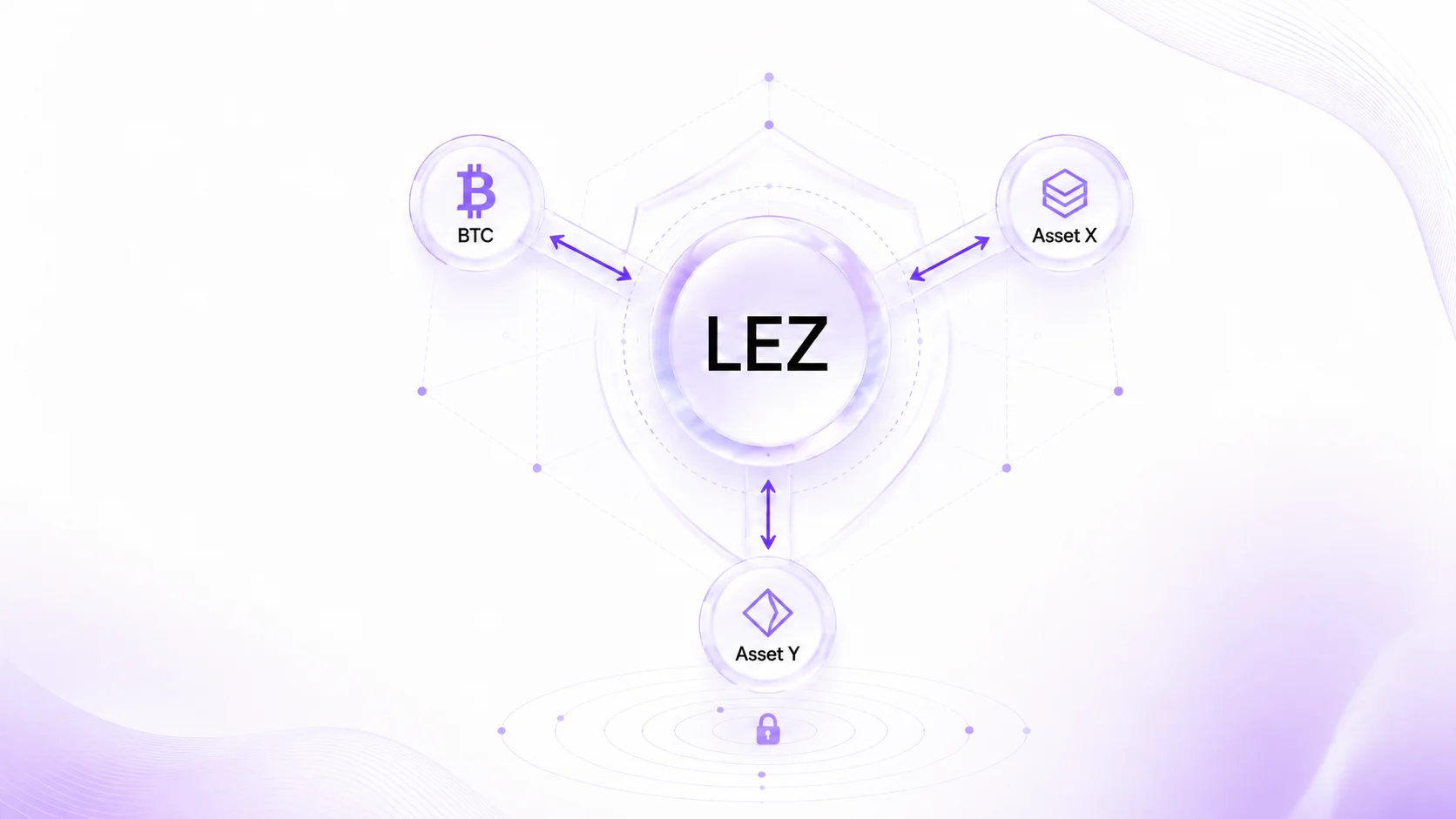
At a high level, the work includes LEZ-side escrow design, swap logic, per-pair SDKs, maker and taker flows, coordinator logic, command-line tooling, mini-app interfaces, documentation, and security review pathways.
The goal is not only to produce a working implementation.
The goal is to help make atomic swaps usable as an ecosystem primitive: something future Logos builders can test, integrate, extend, and build around.
That distinction matters.
Infrastructure becomes valuable when it stops being isolated code and starts becoming part of the shared surface area other builders can rely on. For a privacy-preserving ecosystem, that shared surface area needs to be secure, understandable, extensible, and aligned with the broader design principles of the stack.
Why Gateway Is Excited to Contribute
Gateway was drawn to this grant because it sits directly at the intersection of several areas our team has been building around for years: execution environments, cross-chain correctness, privacy-preserving application design, interoperability, developer tooling, and production-grade reliability.
Atomic swaps are easy to describe, but difficult to ship well.
They require careful reasoning across multiple chains, different signature schemes, timelocks, refund paths, state recovery, user experience, security assumptions, and failure modes.
That is exactly the kind of infrastructure problem Gateway is built to work on.
For the LEZ Atomic Swap Suite, Gateway brings execution-client depth, applied cryptography experience, cross-chain systems thinking, privacy-preserving application design, and a senior engineering team used to building production infrastructure rather than one-off prototypes.
This is also why the work matters beyond the immediate implementation.
The same design questions that show up in atomic swaps also appear across broader infrastructure conversations: how systems interoperate, where trust is placed, what happens when one side fails, how users recover, what gets exposed, and how infrastructure can be made usable without weakening its guarantees.
That is why this work is strategically important for Gateway: it is private interop in practice.
It is a focused contribution to Logos today, and part of a broader infrastructure category we believe will matter across sovereign, institutional, and ecosystem-led onchain systems.
Why This Matters for the Logos Ecosystem
For Logos, the LEZ Atomic Swap Suite can help strengthen one of the most important parts of any ecosystem: how value enters, exits, and moves.
If every path into an ecosystem depends on external intermediaries, the ecosystem inherits external dependencies at the exact point where autonomy and trust minimization matter most.
Atomic swaps offer a different path.
They help create direct, non-custodial value movement between LEZ and external networks. That gives builders and users another way to interact with the ecosystem while preserving more of the principles the stack is built around.
In that sense, this collaboration is about making the Logos ecosystem more usable, more interoperable, and more ready for builders who need infrastructure they can actually depend on.
Building with the Logos Community
A primitive only becomes infrastructure when it becomes reliable, understandable, documented, and useful enough for others to build on. As the project progresses, Gateway wants the Logos community to follow the development, test the flows when available, review assumptions, give feedback on developer experience, and help identify where the primitive can become easier, safer, and more useful.
The goal is to contribute infrastructure the ecosystem can understand, stress-test, and build around.
That is how open infrastructure becomes durable infrastructure.
A Starting Point for Broader Collaboration
The LEZ Atomic Swap Suite is a strong first piece to build together.
It sits close to one of the most important questions for any sovereign network ecosystem: how value moves across environments without introducing unnecessary trust assumptions.
But it is only one primitive inside a much broader architecture.
Logos is building across privacy, communication, storage, execution, and decentralized coordination. As that stack matures, the need for usable interoperability primitives will only become more important.
For Gateway, this is a concrete starting point. Over time, we would be excited to explore broader collaboration across the Logos ecosystem where Gateway’s experience in infrastructure, execution environments, privacy-preserving applications, interoperability, developer tooling, and production operations can contribute meaningfully.
The strongest ecosystems are not built through isolated components. They are built through primitives that compound: one contribution makes the next one easier, safer, and more useful for everyone building around it.
Looking Ahead
Gateway is excited to contribute to the Logos ecosystem and to help build a primitive that can support the next stage of LEZ.
For us, the broader story is clear.
Sovereign onchain systems need more than strong architecture. They need usable infrastructure, trust-minimized value movement, private interop, developer-ready primitives, and feedback loops that turn technical work into real ecosystem capacity.
This is the first step. There is a lot to build.
Share post
Too good to keep to yourself... Share it with your network!
Read next